There is no single official “hydatidiform mole market size.” Public commercial-research pages use different disease scopes, base years and forecast periods. In November 2026, their headline estimates ranged from about USD 0.78 billion for gestational trophoblastic disease to USD 1.86 billion for a hydatidiform-mole-specific market. Those figures are not interchangeable and should not be treated as audited health statistics.
The practical answer is to state the definition and year first, then compare only estimates that use the same scope. A market forecast can help frame a diligence question. It cannot tell a patient what treatment they need, and it does not replace population, registry or clinical evidence.
Hydatidiform mole market estimates at a glance
Data Bridge Market Research
Scope: global hydatidiform mole market.
Headline: USD 1.86 billion in 2025; USD 2.85 billion by 2033; 5.48% CAGR for 2026–2033.
What to watch: the page describes a hydatidiform-mole-specific commercial market and lists surgery, chemotherapy and other treatment segments. The report methodology is not publicly reproducible from the summary page.
Reed Intelligence market-analysis page
Scope: global gestational trophoblastic disease (GTD).
Headline: USD 780.01 million in 2025; USD 1,441.39 million by 2034; 7.1% CAGR for 2026–2034.
What to watch: this is a broader disease label that includes hydatidiform mole plus other GTD categories, so it cannot be compared directly with the mole-only figure.
Reed Intelligence insight page
Scope: global GTD.
Headline: approximately USD 0.78 billion in 2026; approximately USD 1.34 billion by 2034; 7.0% CAGR for 2026–2034.
What to watch: the starting year and endpoint differ from the other Reed page. The discrepancy illustrates why a headline number needs its exact base year and definition.
Access date: 20 November 2026. The figures above are paraphrases of vendor pages, not our independent market model.
Why the estimates differ
Disease scope is the first difference. Hydatidiform mole is one form of gestational trophoblastic disease. A GTD estimate can include complete and partial moles, invasive mole, choriocarcinoma and rarer tumours, while a mole-only estimate can be narrower. A larger number is not automatically a better estimate if it answers a different question.
Base years and forecasts are the second difference. One page presents a 2025 base and a 2033 endpoint; another uses 2025 as a base with a 2034 endpoint; a third uses 2026 as its starting year. Changing the start year changes the reported value even when the underlying market has not changed.
Geography and treatment mix matter. GTD incidence varies widely by place, and access to ultrasound, hCG testing, evacuation and specialist follow-up also varies. A global revenue estimate therefore mixes different clinical pathways, prices and reimbursement arrangements. Country-level or hospital-level use cannot be inferred from a global headline.
Commercial summaries are not official registries. The pages we checked present research-report summaries and generally do not expose a reproducible, line-level methodology. A purchaser should ask for the patient or procedure denominator, price and reimbursement assumptions, geography, base-year sources and the treatment categories included before relying on the number.
What clinical data can and cannot establish
Market size is a revenue construct. It is not the number of people with a hydatidiform mole, and it is not an incidence rate. The US National Cancer Institute describes reported GTD incidence as varying from 23 per 100,000 pregnancies in Paraguay to 1,299 per 100,000 in Indonesia, with about 110 to 120 per 100,000 in the United States. Those differences reflect reporting and diagnostic practice as well as underlying risk, so they should not be converted into a market value without a defined denominator and price model.
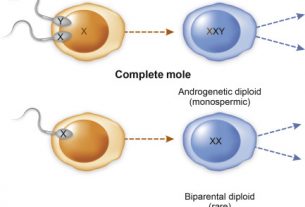
A hydatidiform mole is an abnormal pregnancy in which placental tissue develops abnormally. A partial mole usually has some fetal tissue and a triploid chromosome pattern, whereas a complete mole has no normal fetus. Diagnosis can involve ultrasound, hCG testing and examination of the removed tissue. NHS guidance says a molar pregnancy may be found during an early ultrasound, may end in miscarriage, or may need a procedure to remove the pregnancy.
Most hydatidiform moles are treated with suction evacuation and curettage, but follow-up matters because a minority can persist or progress to gestational trophoblastic neoplasia. NCI describes follow-up with serial serum hCG until normalisation, with monthly follow-up for six months generally recommended. NHS guidance also notes that regular blood and urine hCG checks are used after treatment and that chemotherapy can treat the rare invasive or cancerous forms. Management should be led by an obstetric or gynaecological specialist.
What a useful market brief should state
- Definition: hydatidiform mole only, complete and partial mole separately, or the whole GTD spectrum.
- Base year and forecast: the exact observation year, forecast years and currency.
- Geography: global, regional or country-level, with the included health systems named.
- Unit: patient population, procedures, tests, treatment revenue or total spent, rather than an unexplained “market.”
- Sources and methods: registry or survey inputs, interviews, pricing assumptions and whether the report is audited.
The strongest use of these pages is comparative diligence: identify the definition, test whether the same scope produces a stable number, and keep clinical evidence separate from commercial forecasts. A headline that cannot survive those questions is not a reliable basis for treatment decisions, public-health planning or an investment memo.
Frequently asked question
What is the hydatidiform mole market size?
There is no single official figure. A defensible answer must name the scope and year. The public pages checked here show a GTD estimate of about USD 0.78 billion and a mole-specific estimate of USD 1.86 billion for 2025; because the scopes differ, the two numbers should not be presented as a single range for the same market.
Is a larger market estimate more reliable?
No. A larger number may simply include more diseases, treatments, geographies or years. Reliability depends on transparent definitions and methods, not on the size of the headline.
Does a market forecast change how a molar pregnancy is treated?
No. Clinical care is based on the patient’s findings, pathology, hCG results and specialist guidance. Commercial forecasts are not clinical evidence.
Sources
- Data Bridge Market Research: Global Hydatidiform Mole Market — public summary, accessed 20 November 2026.
- Reed Intelligence: Gestational Trophoblastic Disease Market — public summary, accessed 20 November 2026.
- Reed Intelligence: Global Gestational Trophoblastic Disease Market — public summary, accessed 20 November 2026.
- National Cancer Institute: Gestational Trophoblastic Disease Treatment (PDQ) — accessed 20 November 2026.
- NHS: Molar pregnancy — last reviewed 19 June 2023; accessed 20 November 2026.
This page separates commercial market summaries from clinical information. It is educational and is not medical advice, a market forecast, an investment recommendation or an endorsement of any research vendor.